LIVING TO 100
The Global Longevity Revolution
From Mediterranean kitchens and Japanese communities to advanced laboratories and longevity clinics, the pursuit of a longer, healthier life is becoming one of the world’s most fascinating movements.
For centuries, people have searched for the secret to a long life.
Today, that search has entered an entirely new era.
Scientists are studying the biology of aging. Physicians are placing greater emphasis on prevention. Technology can track everything from sleep and heart rate to blood glucose and physical activity. Researchers are investigating regenerative medicine, while nutrition, exercise and mental wellness are increasingly viewed as essential parts of healthy aging.
At the same time, some of the most valuable lessons may not be new at all.
Around the world, cultures with traditions of walking, eating minimally processed foods, maintaining strong family relationships and remaining socially connected into old age offer important clues about what it means to live not simply longer—but better.
Welcome to the global longevity revolution.
LIFESPAN VS. HEALTHSPAN
One of the biggest changes in longevity thinking is the distinction between lifespan and healthspan.
Lifespan is simply how long we live.
Healthspan refers to the portion of those years spent in relatively good health and independence.
For many longevity researchers and healthcare professionals, adding years to life isn’t enough. The greater goal is to delay chronic disease, preserve physical and cognitive abilities and help people remain active for as much of their lives as possible.
That means the future of longevity may be less about discovering a magical treatment that allows everyone to reach 120 and more about preventing or delaying the conditions that commonly reduce quality of life as we age.
PREVENTION BECOMES PERSONAL
Traditional medicine often responds after illness appears.
The longevity movement is placing greater attention on what happens before that point.
Regular health screenings, blood pressure management, cholesterol monitoring, vaccination, cancer screening and attention to metabolic health can identify risks earlier.
Technology is adding another dimension.
Wearable devices can provide continuous information about movement, sleep and cardiovascular indicators. Some consumers also use continuous glucose monitors and other health-tracking technologies to better understand how their bodies respond to everyday behavior.
Artificial intelligence may eventually help clinicians interpret increasingly complex combinations of medical records, imaging, genetics and real-time health information.
But more data doesn’t automatically mean better health. Measurements are most valuable when they lead to evidence-based decisions made with qualified healthcare professionals.
THE LONGEVITY KITCHEN
If there is one longevity strategy that appears repeatedly across cultures, it is remarkably simple:
Eat well for a very long time.
Researchers continue to study dietary patterns associated with cardiovascular and metabolic health, particularly eating patterns rich in vegetables, fruits, legumes, whole grains, nuts and other minimally processed foods.
The Mediterranean diet is perhaps the best-known example.
Traditional meals found in parts of Greece, Italy and neighboring regions emphasize vegetables, legumes, olive oil, grains and moderate portions rather than highly processed foods.
Across Asia, traditional diets provide different approaches. Japanese cuisine frequently includes fish, vegetables, soy foods and smaller portions, while many traditional Indian diets incorporate legumes, vegetables, herbs and spices.
The foods differ dramatically.
The broader lesson may be that healthy aging doesn’t require every culture to eat exactly the same meal.
A sustainable diet can reflect local traditions while emphasizing nutrient-rich foods, appropriate portions and long-term consistency.
JAPAN: A CULTURE OF ACTIVE AGING
Japan has long attracted international attention for longevity.
The lessons are about more than food.
Walking and everyday movement remain integrated into life for many people. Older adults may remain engaged with family, friends and their communities. Cultural ideas surrounding purpose and continued participation in society have also generated considerable international interest.
Okinawa, in particular, has frequently been studied and popularized in discussions of healthy aging.
While no community possesses a guaranteed formula for reaching 100—and longevity patterns can change across generations—the Japanese example reminds us that health isn’t created exclusively inside a hospital.
The design of communities, social relationships, daily routines and cultural attitudes toward aging can matter too.
THE MEDITERRANEAN: HEALTH AROUND THE TABLE
In Mediterranean cultures, food is often about more than nutrition.
It is social.
Meals can bring families and friends together, creating a combination of nutrition, conversation and connection.
That matters because loneliness and social isolation are increasingly recognized as important public-health concerns.
A long life without meaningful relationships isn’t necessarily a healthy one.
The Mediterranean approach therefore offers a powerful reminder: sometimes a healthy lifestyle isn’t one isolated behavior.
It is an ecosystem.
Food. Movement. Family. Community. Rest. Purpose.
Together, these everyday behaviors may be more powerful than any fashionable wellness trend.
MOVEMENT MAY BE THE MOST POWERFUL MEDICINE WE ALREADY HAVE
The longevity industry can sound extremely futuristic, but one of its strongest tools remains wonderfully low-tech:
Exercise.
Regular physical activity supports cardiovascular health, muscle strength, balance, bone health and metabolic function.
As people age, maintaining muscle becomes particularly important.
This has helped strength training become a major part of modern longevity conversations.
The goal isn’t necessarily to become a bodybuilder at 80. It is to maintain enough strength to carry groceries, climb stairs, recover from illness, maintain balance and continue living independently.
Walking remains equally important because it is accessible to so many people.
The future of longevity may include sophisticated biotechnology, but it will almost certainly continue to include something humans have been doing forever:
moving.
SLEEP: THE OVERLOOKED LONGEVITY TOOL
Modern culture has sometimes treated sleep as something successful people can sacrifice.
Health research has increasingly challenged that idea.
Sleep plays an important role in physical recovery, immune function, metabolism, cardiovascular health, memory and cognitive performance.
The longevity movement is helping reposition sleep from a luxury to a health priority.
Smartwatches, sleep trackers and specialized mattresses may provide information, but technology cannot replace the fundamentals: sufficient sleep, consistent routines and evaluation for conditions such as sleep apnea when appropriate.
Sometimes innovation begins by respecting basic biology.
THE MIND MATTERS TOO
A healthy body and healthy mind cannot easily be separated.
Stress, relationships, social connection and emotional well-being can influence how people experience aging.
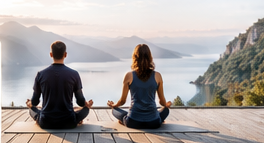
This is one reason meditation, mindfulness, time in nature, hobbies, community involvement and meaningful relationships have become prominent parts of wellness conversations.
Purpose may matter as well.
People often need something to wake up for—family, work, creativity, volunteering, learning, faith, friendship or simply the desire to remain involved in the world.
Aging successfully may therefore require more than preserving the body.
It may require continuing to participate in life.
REGENERATIVE MEDICINE: PROMISE AND CAUTION
Few areas of longevity generate more excitement—or more confusion—than regenerative medicine.
Researchers are studying stem cells, tissue engineering, gene therapies and other approaches intended to repair or replace damaged cells and tissues.
The scientific potential is significant.
However, consumers should distinguish legitimate clinical research and approved medical treatments from commercial claims that move ahead of the evidence.
Not every treatment marketed as “regenerative,” “anti-aging” or “stem cell therapy” has been proven safe and effective.
That makes credible research, appropriate regulation and qualified medical guidance especially important.
The longevity revolution should be driven by science—not simply by marketing.
CAN WE ACTUALLY SLOW AGING?
This may be the billion-dollar question.
Scientists are investigating biological processes associated with aging, including cellular senescence, inflammation, metabolism, DNA damage and changes in how cells communicate.
Researchers are also studying drugs and compounds that may influence pathways associated with aging.
But there is an important distinction between exciting laboratory research and a proven treatment that meaningfully extends healthy human life.
Much remains experimental.
For now, some of the strongest strategies for healthy aging remain remarkably familiar: don’t smoke, stay physically active, maintain healthy blood pressure and metabolic health, eat nutritious foods, sleep adequately, stay socially connected and receive appropriate preventive healthcare.
The science of tomorrow is exciting.
The fundamentals of today still matter.
THE LONGEVITY ECONOMY
Healthy aging isn’t only becoming a scientific movement.
It is becoming a major global business.
Consumers are spending on fitness, wellness tourism, nutrition, diagnostics, wearables, personalized health services, beauty, supplements, medical technology and longevity-focused clinics.
Hotels and resorts are developing wellness programs.
Technology companies are creating health-monitoring devices.
Fitness businesses are developing programs specifically for older adults.
Healthcare companies are investing in earlier detection and remote monitoring.
Beauty and wellness brands are increasingly talking about aging not as something to hide, but as something to manage intelligently and confidently.
This creates enormous opportunities—but also enormous responsibility.
Companies serving people who want to live longer must be especially careful not to turn hope into exaggerated medical promises.
WHAT CAN WE LEARN FROM THE WORLD?
Perhaps the most fascinating lesson of global longevity is that there is no single culture with all the answers.
From Japan: everyday movement, moderation and continued social participation.
From Mediterranean cultures: nutrient-rich food, shared meals and strong relationships.
From modern American medicine: screening, advanced diagnostics, medical technology and treatment of risk factors.
From emerging biotechnology: the possibility of repairing disease and age-related damage in ways previous generations could barely imagine.
From wellness traditions around the world: the importance of rest, balance, community and caring for both mind and body.
The future may combine the best of all of them.
THE CENTENARIAN OF THE FUTURE
Imagine someone celebrating their 100th birthday in the decades ahead.
They may wear technology that continuously monitors important health indicators.
Artificial intelligence may help physicians detect disease years earlier.
Regenerative medicine may provide treatments unavailable today.
Their home may be designed to support independent living.
But their daily routine might still look surprisingly familiar.
They may walk.
They may eat vegetables.
They may spend time with people they love.
They may exercise.
They may sleep well.
And perhaps most importantly, they may still have a reason to look forward to tomorrow.
The global longevity revolution is not ultimately about defeating age.
It is about redefining what aging can look like.
Because the greatest achievement may not be reaching 100.
It may be reaching 100 with health, independence, curiosity, purpose—and a life still worth celebrating.
THE LONGEVITY FORMULA
MOVE
Combine everyday activity with cardiovascular exercise, strength and balance.
NOURISH
Build a sustainable eating pattern around nutritious, minimally processed foods.
PREVENT
Use appropriate screenings and professional medical care to identify health risks early.
SLEEP
Treat quality sleep as an essential part of health rather than an optional luxury.
CONNECT
Maintain friendships, family relationships and meaningful social interaction.
THINK
Continue learning, creating and challenging the brain throughout life.
PURPOSE
Stay involved in activities and relationships that give life meaning.
QUESTION THE HYPE
Promising longevity discoveries are emerging, but “anti-aging” claims should be supported by credible scientific evidence.
THE BIG IDEA
The future of longevity may combine the oldest lessons of healthy cultures with the newest achievements of science and technology. The goal isn’t simply more years of life—it is more life in those years.